
Cutting your daily caloric intake by another 500 calories won’t fix a metabolism that has stopped responding to your instructions. In 2026, we recognize that stubborn abdominal weight isn’t a failure of willpower, but a failure of internal signaling. You’ve likely felt betrayed by your own body as you balance chronic fatigue and brain fog with a waistline that continues to expand despite no change in your habits. It’s a frustrating cycle where “eating less and moving more” only seems to deepen the exhaustion and sleep disturbances you’re already facing.
The clinical connection between hormone imbalance and belly fat is well-documented, yet many people are still told to simply try harder. We’re here to change that narrative and provide the clarity you deserve. You’ll discover why traditional dieting often backfires when your cortisol, insulin, or sex hormones are out of alignment. This guide explores how science-based medical optimization can succeed where restriction fails. We’ll preview how targeted treatments, such as bioidentical pellet therapy, can recalibrate your system and restore your energy levels. By understanding the root cause of abdominal weight gain, you can finally find a path toward lasting health that works with your biology instead of against it.
Key Takeaways
- Distinguish between standard subcutaneous fat and the metabolically active visceral fat that characterizes a true hormonal belly.
- Identify the specific roles of cortisol and insulin in creating a hormone imbalance and belly fat, locking your body into a storage-only state.
- Learn why “normal” laboratory reference ranges may be preventing you from receiving the targeted care needed for optimal metabolic function.
- Discover how overtraining and extreme caloric restriction can inadvertently signal your body to protect and increase abdominal fat deposits.
- Explore how integrating bioidentical pellet hormone therapy with medical weight loss injections addresses the root physiological barriers to fat loss.
What is ‘Hormonal Belly’ and Why is it Different?
Many patients describe the sudden appearance of a “spare tire” that seems to defy every effort at the gym. This isn’t just a matter of total body weight. It’s a specific physiological shift. Unlike the soft, pinchable fat found on the arms or legs, a hormonal belly often feels firm or presents as a distinct protrusion in the midsection. This phenomenon is a primary indicator of hormone imbalance and belly fat, where the body’s internal signaling prioritizes storage in the abdomen over metabolic efficiency.
Standard weight loss strategies often fail here because they treat all fat as equal. However, the fat accumulated due to hormonal shifts is uniquely resistant to traditional “cardio and calorie” approaches. This is because the tissue isn’t just sitting there; it’s biologically active. Abdominal fat actually functions as its own endocrine organ, secreting its own hormones and inflammatory markers that further disrupt your metabolism. This creates a self-sustaining cycle where the fat itself makes it harder to lose weight, regardless of how much you restrict your diet.
Visceral Fat: The Hidden Health Risk
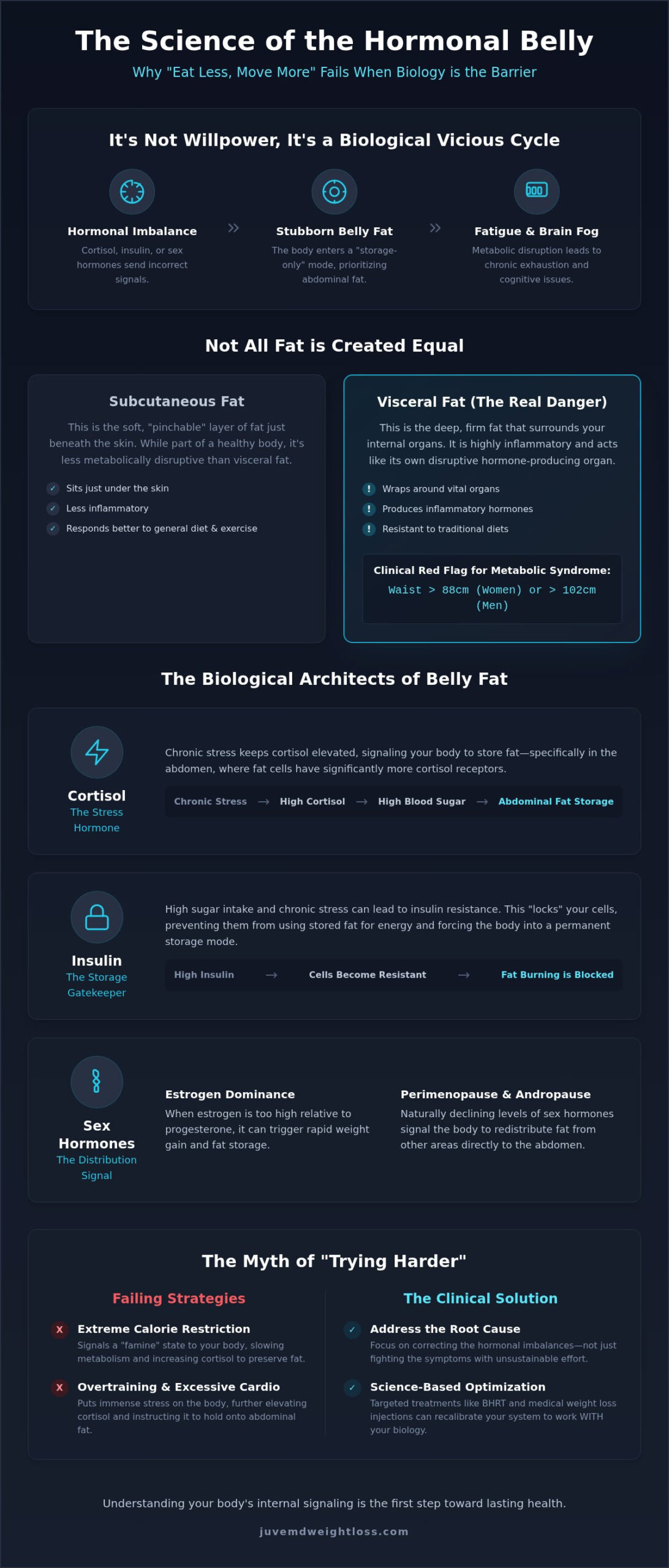
Clinical experts distinguish between subcutaneous fat, which sits just under the skin, and visceral fat. Visceral fat is the deeper, more dangerous layer that wraps around your internal organs. Abdominal obesity is a significant clinical red flag because this visceral adipose tissue is highly inflammatory. According to the 2026 AHA/ACC/ADA/ASN guidelines, waist circumferences exceeding 88 cm for women or 102 cm for men are key markers for metabolic syndrome. This isn’t just about aesthetics; it’s about the systemic impact on your cardiovascular and kidney health.
The Myth of the ‘Age-Related’ Middle
It’s a common misconception that a thickening waistline is an unavoidable consequence of getting older. While the calendar moves forward, the primary driver of this change is shifting chemistry rather than age itself. During perimenopause or andropause, declining levels of sex hormones signal the body to redistribute weight to the abdomen. This shift can have a profound psychological impact, making you feel like a stranger in your own skin. Recognizing that this is a clinical issue, rather than a personal failing or a natural part of aging, is the first step toward the specialized care required to correct it. Many patients addressing these hormonal changes also find that the same biological shifts affecting their metabolism are accelerating visible signs of aging in their skin, which is why treatments like Sculptra injections Las Vegas providers offer have become an important part of a comprehensive hormonal wellness strategy.
The Biological Culprits: Cortisol, Insulin, and Sex Hormones
Understanding the connection between hormone imbalance and belly fat requires looking past caloric intake to the chemical messengers governing your metabolism. When these messengers send the wrong signals, your body effectively “locks” its fat stores, making weight loss nearly impossible through sheer effort alone. This section examines the specific hormones that act as the primary architects of abdominal weight gain.
Cortisol and the ‘Stress Belly’
Cortisol is your primary stress hormone, evolved to help you survive short-term threats. In our modern environment, however, chronic stress keeps cortisol levels perpetually elevated. This constant “fight or flight” state forces your body to prioritize immediate energy by raising blood sugar. A key part of this response is gluconeogenesis, which is the metabolic process where your liver produces glucose from non-carbohydrate sources, such as protein, to fuel a perceived emergency. This excess glucose eventually spikes insulin, which then drives fat storage directly into the midsection. Even individuals who are otherwise lean can develop a “stress belly” because abdominal fat cells possess significantly more cortisol receptors than fat cells found in other areas of the body.
Insulin functions as the gatekeeper of your cells. When you consume high-sugar foods or experience chronic stress, insulin levels remain high to manage the resulting blood sugar. Over time, your cells may become “resistant” to these signals. In this state of insulin resistance, your body cannot easily access stored fat for fuel. Instead, it remains in a storage-only mode, primarily depositing fat in the visceral area surrounding your organs. This biological lock is why many people find that “eating less” simply doesn’t work when their insulin signaling is broken.
Estrogen Dominance vs. Menopause
Female fat distribution is heavily influenced by the delicate ratio of estrogen to progesterone. Estrogen dominance, which occurs when estrogen levels are too high relative to progesterone, can lead to rapid weight gain and stubborn fat. Conversely, the natural decline of estrogen during the transition to menopause signals a major shift in how the body stores energy. Many women find themselves gaining belly fat during menopause as the body moves fat away from the hips and thighs toward the abdomen. Progesterone also plays a vital role in this balance; when it’s deficient, you may experience increased water retention and systemic bloating that makes the abdominal area feel distended and uncomfortable.
For men, the development of a “dad bod” is often a clinical sign of low testosterone. This deficiency leads to a loss of lean muscle mass, which slows the metabolism and allows abdominal fat to accumulate. Interestingly, this visceral fat contains an enzyme called aromatase, which actually converts testosterone into estrogen. This creates a self-perpetuating cycle where more belly fat leads to lower testosterone, which in turn leads to more fat. Identifying these biological roadblocks is the first step toward reclaiming your health with a personalized medical weight loss plan tailored to your unique hormonal profile.
Busting the Myth of ‘Normal’ Lab Results
It’s a frustratingly common scenario: you present with chronic fatigue, brain fog, and a waistline that continues to expand, only to be told your blood work is “perfectly normal.” This disconnect between how you feel and what the paperwork says is a primary reason why many people struggle to address hormone imbalance and belly fat. Standard reference ranges are based on a broad population average, which includes many individuals who are not in peak health. At JuveMD, we look beyond these wide averages to find your personal optimal levels.
The difference between “normal” and “optimal” is the difference between surviving and thriving. A lab result might fall within a standard range, yet still be far from the level your specific biology requires to maintain a healthy metabolism. To identify the potential causes of hormonal belly, we go deeper than basic screenings. We prioritize specific markers that traditional primary care often overlooks, such as Fasting Insulin, DHEA-S, and a full thyroid panel. These tests provide a much clearer picture of why your body is prioritizing fat storage over energy production.
The Flaw in Standard Thyroid Testing
Most standard checkups only measure Thyroid Stimulating Hormone (TSH). While TSH is a useful signal from the brain, it’s an insufficient marker for your actual metabolic health. It doesn’t tell us how much active thyroid hormone is actually reaching your cells. You can have a “normal” TSH while suffering from subclinical hypothyroidism, where your body isn’t producing enough Free T3 to keep your metabolism running efficiently. This “normal” trap leaves many people feeling exhausted and unable to lose weight despite their best efforts.
The Importance of Bioavailable Hormones
Understanding your hormones requires a distinction between “Total” and “Free” levels. Think of total hormones as money in a long-term investment account; it’s there, but you can’t spend it. Free hormones are the “cash in hand” that your body can actually use to burn fat and build muscle. Sex Hormone Binding Globulin (SHBG) is a protein that can “lock up” your hormones, making them unavailable for use even if your total levels look fine. Optimal is a deeply personalized metric that accounts for your symptoms, your lifestyle, and your unique bioavailable hormone levels.
Dr. Andrea Dempsey and the team at JuveMD analyze the whole patient rather than just the lab report. We recognize that your symptoms are just as important as the data on the page. By focusing on medical optimization, we can identify subtle imbalances that standard tests miss. This pedagogical approach ensures you understand exactly what your labs mean and how we plan to restore your physiological balance through targeted, science-based care.
Why Your Current Weight Loss Strategy is Failing
If you’ve doubled your time on the treadmill and cut your portions in half only to see the scale remain stagnant, you’re likely experiencing the metabolic compensation effect. This is a common hurdle for those dealing with hormone imbalance and belly fat. Most traditional advice suggests “eating less and moving more,” but for a body in hormonal distress, this approach often backfires. When the body perceives a state of chronic stress and caloric scarcity, it doesn’t burn fat; it defends it.
Excessive cardio is frequently the first tool people reach for when they notice weight gain. However, long sessions of high-intensity aerobic work can chronically elevate cortisol. As we established earlier, cortisol specifically targets abdominal receptors, signaling the body to store energy in the midsection for perceived future emergencies. You can’t out-run a hormonal signal. Similarly, sit-ups won’t fix this. While abdominal exercises strengthen the core, they cannot override the chemical signals that tell your body to prioritize visceral fat storage. Spot reduction is a myth that ignores the underlying endocrine reality.
The Metabolic Compensation Effect
This is your body’s defensive mechanism against what it perceives as starvation. When you restrict calories too severely, your thyroid may downregulate to conserve energy. This “starvation response” slows your basal metabolic rate, meaning you burn fewer calories at rest than you did before the diet began. This is why “dieting harder” almost always leads to a frustrating weight loss plateau. Your biology is simply more powerful than your willpower, and it will prioritize survival over aesthetics every time.
Sleep: The Underrated Fat Burner
Sleep is a metabolic necessity rather than a luxury. Research shows that even one night of poor sleep can cause insulin levels to mimic a pre-diabetic state the following day. Deep, restorative sleep is also the primary window for the release of growth hormone, which is essential for fat metabolism and muscle repair. To support your hormonal health, prioritize sleep hygiene by maintaining a consistent wake time and reducing blue light exposure in the evening. Without adequate rest, your body remains in a high-cortisol state, making it nearly impossible to shed abdominal weight.
Breaking this cycle requires a shift from restriction to restoration. Instead of fighting your biology, you need a strategy that recalibrates your internal signals. If you’re ready to move past the “eat less” myth and address the root cause of your weight gain, explore our medical weight loss programs designed to restore your metabolic health.
Clinical Solutions: BHRT and Medical Weight Management
While understanding the biological “why” behind your weight gain is empowering, the “how” of correction requires a clinical approach. In 2026, the medical community has shifted away from generic advice toward precision medicine. Addressing hormone imbalance and belly fat is no longer about restriction; it’s about restoration. At JuveMD, we utilize bioidentical pellet hormone therapy and medical weight loss injections to bypass the metabolic roadblocks that have kept you stuck. These treatments work in tandem to recalibrate your system, moving you from a state of storage to a state of efficiency.
The Power of Bioidentical Pellets
Bioidentical pellet therapy represents the gold standard for long-term hormonal stabilization. Unlike creams that require daily application or pills that can cause fluctuating “rollercoaster” levels, pellets provide a consistent, 24/7 physiological release. These tiny inserts, placed just under the skin, mimic the way your body naturally secretes hormones. This steady delivery is crucial for metabolic health because it prevents the hormonal dips that trigger intense sugar cravings and energy crashes. Patients often appreciate the “set it and forget it” convenience, as one insertion typically remains effective for several months. This creates a foundation of stability that makes fat loss achievable again. Patients who pursue this level of hormonal restoration frequently find they are also ready to address other signs of hormonal aging, including facial volume loss that responds well to collagen-rebuilding treatments like Sculptra injections Las Vegas clinics now offer as part of a comprehensive aesthetic and wellness plan.
A Science-Based Roadmap to Results
The most effective results occur when we combine hormonal optimization with innovative medical weight loss tools. By integrating BHRT with medical weight loss injections, such as GLP-1 agonists, we can address both the hormonal signaling and the metabolic rate simultaneously. This synergy helps preserve lean muscle tissue while specifically targeting the visceral fat we discussed earlier. It’s a comprehensive strategy that moves beyond the scale to focus on actual body composition and long-term health markers. Following the 2026 updates in hormone therapy safety, more patients than ever are finding relief through these specialized protocols.
Your journey begins with a pedagogical consultation led by Dr. Andrea Dempsey. We don’t just hand you a prescription; we take the time to explain the clinical link between your lab results and your symptoms. This personalized treatment plan ensures that every intervention is tailored to your unique biological needs. We monitor your progress meticulously, adjusting your protocol as your body returns to its optimal state. If you’re ready to reclaim your vitality and see real changes in your midsection, schedule your hormone optimization consultation at JuveMD today. It’s time to stop fighting your body and start supporting its natural ability to heal.
Reclaiming Your Health Through Clinical Precision
You’ve spent years fighting a battle that wasn’t about your willpower. We’ve explored how the clinical link between hormone imbalance and belly fat makes traditional dieting nearly impossible when your internal signals are crossed. By moving away from the “normal” lab result trap and addressing the root causes like cortisol spikes and insulin resistance, you can finally stop the cycle of metabolic compensation. The path forward isn’t found in further restriction, but in precise, medical recalibration.
Under the expert care of Dr. Andrea Dempsey, you can access specialized bioidentical pellet therapy and comprehensive medical weight loss programs designed for your unique biology. These tools provide the stability your metabolism needs to thrive. You don’t have to navigate these body changes alone. Book Your Personalized Hormone and Weight Loss Consultation today to start your journey toward clarity and health. You deserve a solution that works with your body’s natural rhythms instead of against them.
Frequently Asked Questions
What does a hormonal belly feel like compared to regular fat?
A hormonal belly often feels firm to the touch or presents as a distinct protrusion rather than the soft, pinchable fat found elsewhere on the body. This is because it is often comprised of visceral fat, which sits behind the abdominal wall and surrounds your internal organs. While subcutaneous fat is largely aesthetic, this deeper fat is metabolically active and can make the midsection feel bloated or distended regardless of your overall weight.
Can hormone replacement therapy actually help me lose belly fat?
Hormone replacement therapy, specifically bioidentical pellet therapy, helps reduce abdominal weight by correcting the underlying chemical signals that favor fat storage. When your estrogen, testosterone, or thyroid levels are optimized, your body can move out of storage mode and begin utilizing fat for energy. This clinical recalibration addresses the root cause of hormone imbalance and belly fat, making your diet and exercise efforts significantly more effective.
Why is my belly fat increasing even though I’m eating healthy?
Your body may be prioritizing fat storage due to a shift in your internal chemistry rather than your caloric intake. Even with a nutrient-dense diet, high levels of cortisol or insulin can override your metabolism and signal the body to protect its energy stores in the abdomen. This is often seen during perimenopause or periods of chronic stress, where the body’s hormonal priority shifts from burning fuel to preserving it for perceived survival.
Is it possible to have a hormonal belly but ‘normal’ blood work?
It is common for patients to have laboratory results within a standard reference range while still experiencing significant symptoms. These ranges are based on broad population averages and may not reflect what is optimal for your specific biology. We focus on achieving peak physiological levels, which involves looking at markers like Free T3 or Fasting Insulin that are frequently overlooked in standard primary care screenings.
Which hormones are most responsible for weight gain in the stomach?
Cortisol and insulin are the primary drivers of abdominal fat, but sex hormones also play a critical role. Cortisol specifically targets receptors in the midsection during times of stress, while insulin resistance locks fat cells in a storage state. In women, a decline in estrogen during menopause signals a shift in fat distribution toward the belly; meanwhile, low testosterone in men leads to increased visceral fat and a slower metabolic rate.
How long does it take to see weight loss results with BHRT?
Most patients begin to feel a shift in their energy levels and a reduction in cravings within the first four weeks of bioidentical pellet therapy. Visible changes in body composition, specifically in the abdominal area, typically become more apparent between eight and twelve weeks as the metabolism stabilizes. Because pellets provide a consistent 24/7 release, the body has a steady foundation to begin repairing the metabolic damage caused by long-term hormone imbalance and belly fat.
Can stress alone cause me to gain weight in my midsection?
Chronic stress is a powerful driver of abdominal weight gain because it keeps cortisol levels perpetually elevated. This elevation triggers the liver to produce excess glucose, which in turn spikes insulin and promotes fat storage specifically in the visceral region. Even if your diet remains unchanged, a state of constant fight or flight can physically alter your waistline by prioritizing energy storage around your vital organs.
Is medical weight loss safe for people with hormonal imbalances?
Medical weight loss is not only safe but often essential for those whose weight gain is driven by hormonal roadblocks. At JuveMD, we integrate tools like GLP-1 injections with hormonal optimization to ensure that fat loss is achieved while preserving lean muscle mass. This supervised clinical approach ensures that we are treating the whole person and addressing the physiological barriers that make traditional weight loss so difficult.