
What if the path to lasting hormonal stability didn’t involve daily pills or messy creams, but instead required just fifteen minutes of your time a few times a year? While the idea of any medical treatment can spark a bit of anxiety, the hormone pellet insertion procedure is a sophisticated, minimally invasive solution designed for your comfort and long term wellness. It’s natural to have questions about how a tiny pellet remains in the body or whether the process involves significant downtime. You aren’t alone in wanting to understand the clinical details before committing to a new health journey.
At JuveMD, we believe that medical excellence should always be paired with a transparent and supportive patient experience. This guide will help you discover exactly what happens during your visit, from the initial site preparation to the final recovery steps, so you can approach your treatment with total confidence. We’ll walk you through each stage of the process, providing clarity on pain management and the simple care required afterward. By demystifying the steps involved, we aim to replace uncertainty with the reassurance that your health is in expert hands.
Key Takeaways
- Understand the mechanics of the hormone pellet insertion procedure, a minimally invasive technique that uses rice-sized cylinders to provide months of steady hormone release.
- Learn why the process is virtually painless due to localized numbing and expert clinical techniques designed for your comfort.
- Master simple post-procedure care, such as bandage management and activity restrictions, to ensure your site heals quickly and discreetly.
- Discover why pellets outperform traditional methods by eliminating daily hormone fluctuations and removing the risk of accidental transfer to family members.
- Explore how personalized dosing based on your unique lab results ensures your treatment plan is tailored specifically to your body’s requirements.
Understanding the Hormone Pellet Insertion Procedure
The hormone pellet insertion procedure is a sophisticated yet straightforward clinical method for restoring hormonal balance. Unlike traditional oral or topical treatments, this technique involves placing tiny, customized cylinders just beneath the skin. These pellets, which are roughly the size of a grain of rice, consist of bioidentical hormones that are molecularly identical to those your body produces naturally. This approach is a core component of Hormone Therapy, offering a more physiologic way to manage deficiencies without the daily maintenance of other delivery systems.
The primary objective of this delivery system is to provide a consistent, 24/7 release of hormones into the bloodstream. By mimicking the body’s natural secretion patterns, patients can avoid the daily fluctuations often associated with other methods. Most individuals only need to return for a follow-up hormone pellet insertion procedure every three to five months, making it a convenient option for those with busy lifestyles. At JuveMD, Dr. Andrea Dempsey ensures the entire process is completed in a refined clinical setting, typically taking only 15 to 20 minutes from start to finish.
Why the Insertion Method is Superior
Choosing pellets over pills or creams offers several distinct clinical advantages. Most notably, it eliminates the “roller coaster” effect that many patients find frustrating. When you take a pill or apply a gel, hormone levels spike and then drop rapidly; pellets maintain a steady state. Additionally, because the hormones are absorbed directly into the capillaries, they bypass the liver. This avoidance of “first-pass metabolism” is generally considered a safer profile for long-term health. The “set-it-and-forget-it” nature of this treatment also removes the stress of daily dosing, significantly improving your quality of life while ensuring you never miss a dose. For a deeper look at how this approach compares to other options, our ultimate guide to bioidentical pellet hormone therapy covers the latest clinical insights and what to expect in 2026.
Am I a Candidate for Pellet Insertion?
Determining if you’re a candidate begins with a detailed conversation about your daily experience. Many patients seek out this procedure because they feel “off” but can’t quite pinpoint the cause. Common indicators include:
- Persistent fatigue that doesn’t improve with rest
- Difficulty focusing or “brain fog”
- A noticeable decline in libido or sexual wellness
- Unexplained mood shifts or irritability
At JuveMD, the process is deeply rooted in medical precision. We don’t rely on guesswork. Every treatment plan starts with comprehensive blood panels to identify specific hormonal gaps. Dr. Dempsey reviews your full medical history and lab results to ensure bioidentical pellet therapy is the safest and most effective path forward for your unique biology.
Step-by-Step: What to Expect During Your Appointment
Your appointment for the hormone pellet insertion procedure is designed to be an efficient and comfortable experience, typically lasting between 15 and 20 minutes. We prioritize your comfort from the moment you enter our clinical space. The process is methodical, ensuring that every safety protocol is followed while maintaining a warm, supportive environment. Understanding each stage of the appointment can help alleviate any lingering anxiety you might feel about the clinical process.
Step 1: Preparation and Cleansing. The process begins with the selection of the insertion site, which is almost always the upper gluteal area or the hip. This location is chosen for its stability and the presence of subcutaneous fat. Once selected, the skin is thoroughly cleansed with a medical-grade antiseptic to maintain a sterile environment.
Step 2: Local Anesthesia. To ensure the procedure is virtually painless, a small amount of local anesthetic is applied. You’ll feel a quick pinch and a brief stinging sensation as the numbing agent is injected. Within moments, the area becomes completely desensitized, allowing the rest of the procedure to continue without discomfort.
Step 3: The Incision. Once the site is fully numb, a tiny incision is made. This opening is exceptionally small, usually measuring only a few millimeters in length. Because these pellets are tailored for your body, it’s helpful to stay informed about industry standards, such as the FDA statement on compounded drugs, which emphasizes the importance of professional oversight for customized medical preparations.
Step 4: Pellet Placement. A sterile trocar is then used to gently position the pellets into the fatty tissue layer just beneath the skin. This ensures they’re placed where they can be absorbed steadily by the body’s capillaries.
Step 5: Site Closure. Finally, the incision is closed using sterile tape, known as Steri-Strips, rather than traditional stitches. A small pressure bandage is applied over the tape to protect the site and minimize any potential bruising. This approach ensures a discreet result with minimal risk of scarring.
The Role of the Trocar
A trocar is a specialized medical instrument designed for the precise placement of the hormone cylinders. A trocar is a sterile, hollow tube used to guide the pellet into place. During this part of the hormone pellet insertion procedure, you won’t feel any sharp sensations. Most patients report feeling only a slight pressure or a dull tugging as the instrument is used. It’s a quick, controlled movement that ensures the pellets are situated at the correct depth for optimal absorption.
Site Selection: Hip vs. Flank
The upper gluteal area is preferred because it offers a low-movement profile, which is essential for the initial healing phase. Dr. Dempsey will ask about your daily activity levels and even your sleeping habits to choose the most convenient side. If you’re a side sleeper, for instance, we’ll typically use the opposite hip to ensure your comfort at night. This level of personalized attention ensures your treatment doesn’t interfere with your lifestyle. If you’re ready to explore how this treatment fits into your wellness routine, you can speak with our specialists to learn more about the process.
Post-Procedure Recovery and Site Care
Once the hormone pellet insertion procedure is complete, the focus shifts to ensuring the site heals properly so the pellets can begin their work. While the clinical portion is brief, the first few days of recovery are essential for locking the pellets into place within the subcutaneous tissue. You’ll leave the clinic with a small pressure bandage applied over the Steri-Strips. It’s vital to keep this pressure bandage on for the first 24 hours. This initial compression is the most effective way to minimize localized bruising and ensure the tiny incision stays sealed as the numbing agent wears off.
Water management is another critical aspect of your immediate aftercare. You can enjoy a standard shower 24 hours after your appointment, provided you’re careful with the site. After washing, don’t rub the area with a towel; instead, gently pat the skin dry to avoid disturbing the Steri-Strips. However, you must avoid submerging the site in water for three to seven days. This means no baths, hot tubs, or swimming. Keeping the area free from prolonged moisture prevents the incision from softening prematurely, which significantly reduces the risk of minor infections or the pellet shifting.
Managing Minor Side Effects
It’s normal to experience a few mild sensations as your body adjusts. You might notice slight bruising, redness, or even a small “knot” at the insertion site. These are standard responses to the procedure and typically resolve within a week. To manage any localized swelling, you can apply an ice pack for 15 minutes at a time during the first 48 hours. While rare, you should contact us if you experience a fever or if the site becomes increasingly painful, hot to the touch, or begins to drain. Proper healing usually looks like a small, fading pink mark that eventually disappears entirely.
When Can I Resume Normal Activity?
Most patients return to their daily routines immediately, but lower-body exercise requires a brief pause. You can walk or perform light upper-body work right away. However, we recommend a 72-hour rule for vigorous lower-body activities like running, cycling, or heavy squats. Resting the gluteal muscle prevents a rare occurrence known as extrusion, where the pellet is pushed back toward the incision before the site has fully healed. As for the Steri-Strips, don’t peel them off. They’ll naturally lose their adhesion and fall off on their own, usually within five to seven days, signaling that the skin has successfully closed. Following these steps ensures the hormone pellet insertion procedure results in a seamless transition to your new wellness baseline.
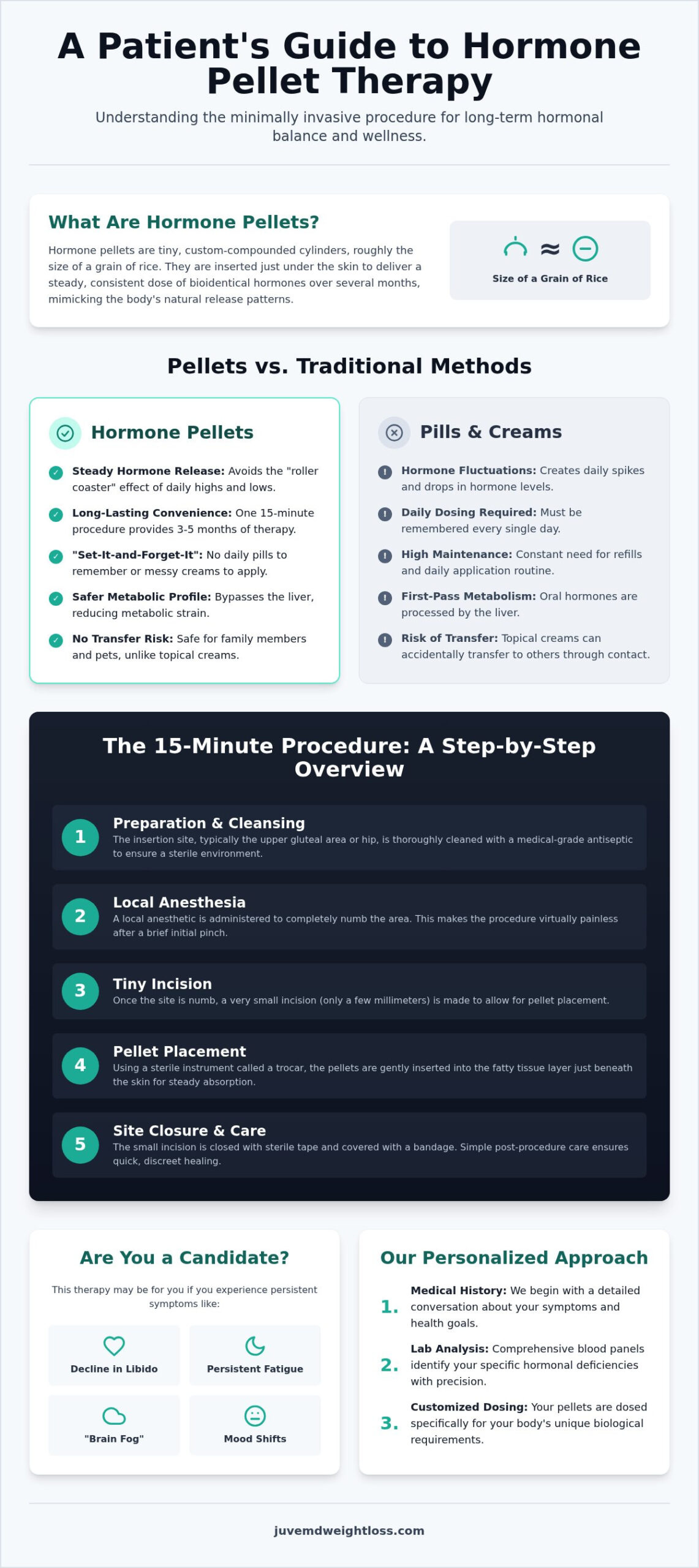
Hormone Pellets vs. Other Delivery Methods
When evaluating bioidentical hormone replacement therapy, the delivery method you choose significantly impacts your daily experience. While pills, creams, and injections are common options, many patients find the hormone pellet insertion procedure offers a level of stability that other methods simply can’t match. Oral medications often create “peaks and valleys” in blood levels. You might feel a surge of energy shortly after taking a pill, followed by a sharp decline as the dose wears off. Pellets eliminate this frustrating cycle by providing a constant, steady stream of hormones directly into the bloodstream.
Creams and gels pose a unique challenge known as transfer risk. Because these are applied topically, there’s always a possibility of the hormone rubbing off on children, partners, or even pets. Pellets are safely sealed beneath the skin, removing this concern entirely. Similarly, while injections are effective, they require weekly or bi-weekly needles and frequent clinic visits. In contrast, the hormone pellet insertion procedure is a single, 15-minute visit every few months. This frees you from the burden of constant scheduling and the discomfort of regular injections.
One of the most fascinating aspects of pellet therapy is its responsiveness to your body’s physiological needs. Because the pellets are placed in the capillary-rich subcutaneous fat, increased blood flow during exercise or periods of stress naturally increases the release of hormones. This mimics the way your body functioned before hormone levels declined. It provides support exactly when you need it most, rather than forcing your body to wait for a scheduled dose.
The Science of Steady-State Release
This consistency is rooted in a concept called zero-order kinetics. In simple terms, this means the hormone is released at a constant, predictable rate regardless of the concentration already in your body. This steady-state release is why patients often report more consistent relief from symptoms like hot flashes, insomnia, and mood swings. As the body gradually absorbs the pellet over several months, the material dissolves completely. There’s nothing left behind to be surgically removed once the treatment cycle is complete. To understand the full science behind how plant-based hormones are formulated to match your body’s biology, explore our comprehensive resource on bioidentical pellet hormone therapy and the latest 2026 clinical advances.
Cost-Effectiveness Over Time
The upfront cost of the procedure reflects the high standard of specialized care and personalized dosing we provide. However, it often proves more cost-effective when viewed over a six-month period. You save on the mental bandwidth required to remember a daily pill or application. The reduced frequency of office visits compared to weekly injections makes it a premier choice for those who value their time. It’s an investment in nearly half a year of total hormonal balance. Ready to reclaim your vitality with a personalized plan? Schedule your consultation at JuveMD today.
Personalized Care: The JuveMD Approach to Insertion
At JuveMD, we recognize that true wellness requires more than just a standard protocol. Dr. Andrea Dempsey oversees every aspect of your hormone optimization journey, ensuring that your treatment is as unique as your biology. We don’t believe in “one-size-fits-all” dosing. Instead, your specific plan is meticulously calculated based on a combination of comprehensive lab results and your personal symptoms. This precision ensures that the hormone pellet insertion procedure delivers exactly what your body needs to thrive.
Our clinical environment is designed to bridge the gap between high-level clinical medicine and a sophisticated wellness experience. We prioritize your privacy and comfort at every turn, providing a space where you feel heard and supported. From the moment you arrive for your 15 to 20-minute procedure, you’ll experience a level of personalized attention that is a hallmark of our practice. We aim to demystify the science behind BHRT, acting as a transparent guide through every stage of your recovery and beyond.
Optimization doesn’t end once the pellets are in place. We provide thorough follow-up care to monitor your progress and ensure your levels are reaching their ideal range. This proactive approach allows us to make any necessary adjustments for future treatments, ensuring your long-term health results remain consistent and empowering. We believe that education is key to your success, so we take the time to explain how your body is responding to the steady-state release of hormones.
Expertise That Matters
Choosing a specialist for your hormone pellet insertion procedure is essential for achieving both the best clinical and aesthetic outcomes. Dr. Dempsey’s expertise ensures that the insertion is performed with a gentle touch, minimizing any potential for visible marks or discomfort. Our initial consultation serves as the foundation for this success, where we build a customized wellness plan that addresses your specific goals. This expert-led perspective positions JuveMD as a leader in bioidentical therapy, focusing on foundational principles of health and the correction of hormonal imbalances.
Your Next Steps to Hormonal Balance
Your journey toward feeling like yourself again begins with clarity. We start with a detailed blood panel to identify your unique hormonal deficiencies. To make the most of your first consultation, we recommend bringing a list of your current symptoms, any recent lab work from other providers, and a summary of your health goals. This transparency allows us to move quickly toward a solution that works for you. Preparing these details in advance helps us focus on a sophisticated, personalized strategy during your visit.
Schedule your hormone consultation with Dr. Andrea Dempsey at JuveMD today.
Reclaim Your Vitality with Precision Care
Restoring your hormonal balance doesn’t have to be a source of stress or confusion. By understanding the hormone pellet insertion procedure, you can see it for what it truly is: a brief, expert-led clinical event that paves the way for months of effortless stability. You’ve learned how bioidentical pellets bypass the liver for a safer profile and how the “set-it-and-forget-it” nature of this therapy removes the daily burden of traditional dosing. This method offers a sophisticated alternative to the daily fluctuations of pills and creams.
Under the guidance of Dr. Andrea Dempsey, our team provides personalized BHRT dosing tailored specifically to your unique lab results and symptoms. We’re committed to offering the highest standard of expert-led clinical care in a sophisticated wellness environment. If you’re ready to move past fatigue and brain fog toward a more vibrant version of yourself, the first step is a simple conversation. Book Your Personalized Hormone Consultation at JuveMD today. It’s time to invest in a treatment plan that finally works in harmony with your body’s natural rhythms.
Frequently Asked Questions
Is the hormone pellet insertion procedure painful?
The hormone pellet insertion procedure is virtually painless because we use a local anesthetic to numb the area before starting. You might feel a quick, cold sting as the numbing agent is applied, but after that, you’ll only feel a sense of pressure during the process. Most patients find the experience much more comfortable than they anticipated, describing it as a minor clinical event with very little discomfort.
How long does the insertion appointment take?
A typical insertion appointment at JuveMD takes approximately 15 to 20 minutes from start to finish. This efficient timeframe allows you to fit the treatment into a busy schedule without significant disruption to your day. While the clinical procedure itself is brief, we always ensure there is enough time to answer your questions and review your personalized wellness goals during your visit.
Will there be a scar after the pellet insertion?
Visible scarring is highly unlikely because the incision required for the pellets is only a few millimeters long. We use sterile tape instead of stitches to close the site, which encourages the skin to heal smoothly and discreetly. Most patients find that the tiny mark fades completely over time, leaving no permanent evidence of the treatment on their skin once it’s fully healed.
How soon will I feel the effects of the hormones after the procedure?
Most patients begin to notice a shift in their energy levels and mood within 7 to 14 days after the procedure. While some symptoms improve quickly, it often takes about two to four weeks to reach full hormonal optimization. Your body needs this time to establish a steady absorption rate from the pellets, resulting in the consistent relief and stability you’re seeking.
Can the pellets fall out after they are inserted?
It’s very rare for pellets to fall out, a process known as extrusion, provided you follow the initial activity restrictions. Pellets are placed deep within the subcutaneous fat layer where they’re meant to stay for the duration of the cycle. By avoiding heavy lower-body exercise for the first 72 hours, you give the tiny incision enough time to seal securely, keeping the pellets in place.
How often do I need to repeat the hormone pellet insertion?
Most individuals repeat the hormone pellet insertion procedure every three to five months to maintain their results. The exact frequency depends on your activity level, stress levels, and how quickly your body processes the hormones. We monitor your lab results and symptom relief to determine the perfect schedule for your unique physiological needs, ensuring your levels remain optimized year-round.
Are there any activities I should avoid immediately after the procedure?
You should avoid vigorous lower-body exercises, such as running or heavy lifting, for at least 72 hours following the insertion. Additionally, it’s important to stay out of hot tubs, swimming pools, and bathtubs for three to seven days. These precautions prevent the incision from reopening or becoming irritated, ensuring the site heals quickly and the pellets remain undisturbed as your body adjusts.
What should I do if the insertion site becomes red or itchy?
Mild redness or itching is often a normal reaction to the adhesive on the bandage or the healing process itself. Applying an ice pack for 15 minutes at a time can help soothe the area and reduce any minor swelling or irritation. However, if the site becomes increasingly painful, hot to the touch, or begins to drain, you should contact our office immediately for further evaluation.